
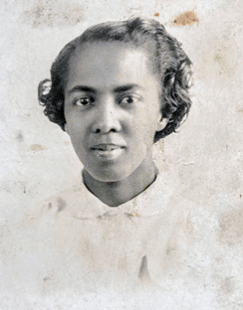
 Maine Mathematician. Beryl Elizabeth Warner Williams (1914-1999), from Bangor, Maine, was the first Black student to graduate in mathematics from the University of Maine, in 1935. In 1940 she also obtained an MA in mathematics from UMaine. She went on to teach math and English at Morgan State University where she became Dean of Continuing Education in 1970. In 2022, the University of Maine named Beryl Warner Williams Hall in her honor.

Welcome!
The University of Maine Department of Mathematics & Statistics provides engaging educational opportunities in the mathematical sciences. Students in our undergraduate programs gain a strong foundation in mathematics and/or statistics. In our MA program, students learn more advanced material, and receive invaluable research and teaching experience in preparation for careers in academia or industry. As a service department, we offer many required courses for majors across campus, and maintain the MATH LAB where students can get support. Incoming students can visit our Course Preparation page to review background material for their upcoming math classes. Our dedicated faculty are not just providing quality instruction, but are also producing nationally recognized research in statistics, pure and applied mathematics, and mathematics education. We hope you will explore our website to learn more about our department and our programs. For more information, please contact us.